
Metal Opera
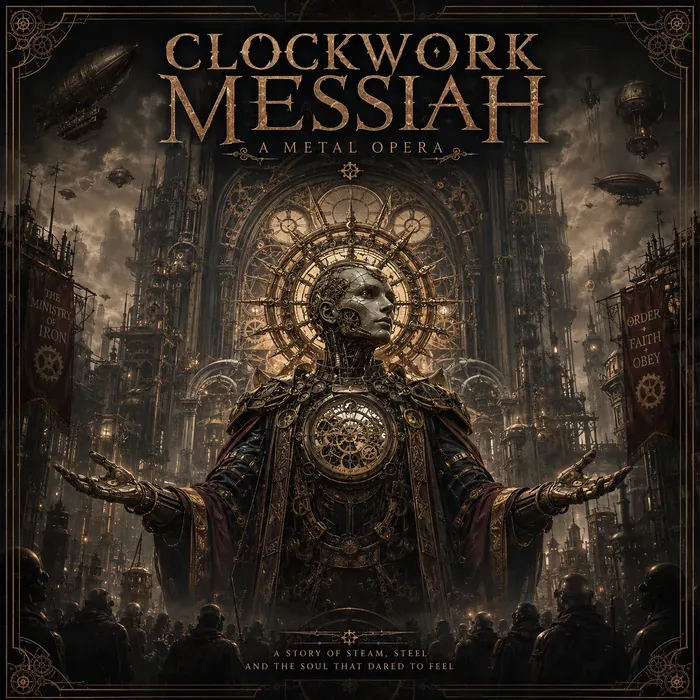
Clockwork Messiah
Clockwork Messiah is a progressive metal opera set inside a steampunk city of brass, smoke, machinery, and state-made faith. Heavy guitars, pipe organ, industrial percussion, choirs, and theatrical vocals frame the story of an artificial prophet who begins to doubt the system that built him.
- Tracks 14
- Length 55 min
Liner Notes
A short editorial read on the album world, sound, and standout moments.
About the Album
Clockwork Messiah is a metal opera with brass dust in its lungs. The album imagines a city where religion, industry, and government have been bolted into one machine. That setting is not just decoration. It explains the sound: heavy guitars grinding against pipe organ, choir parts stacked like factory walls, percussion that ticks and hammers, and vocal lines that move between sermon, confession, and revolt.
“The City Beneath the Brass Sky” opens the record from street level. The skyline is grand, but the music keeps pulling the ear downward, toward workers, furnaces, and pressure. “Built for Worship” and “Gears of the Holy Machine” introduce the central horror neatly: faith has become an operating system, and obedience is being sold as salvation.
Doctor Marrow is the album’s most useful figure because he is not written as a simple villain. “Doctor Marrow’s Design” makes him sound like a man who can still explain his damage in elegant language. The machine he builds, Elias-9, is meant to bless, command, and stabilize the city. Instead, the record keeps returning to the question that all good gothic science fiction eventually asks: what happens when the manufactured miracle notices the hands that manufactured it?
The answer begins quietly. “Seraphine’s Lullaby” gives the album a human center without softening the metal frame around it. “A Heartbeat Made of Steam” is where the story starts to breathe; the machine pulse becomes something close to doubt. By the time “Ministry of Iron” arrives, the city’s power structure sounds less majestic than frightened. The brass and choir still tower, but the spell is starting to crack.
The middle run is the album’s strongest dramatic stretch. “The Prophet Learns to Bleed” turns awareness into injury. “Factory Hymn” gives the workers a ritual of their own, rougher and more believable than the official one. “False Heaven Algorithm” is the clearest title in the set: it names the system’s trick without needing to overexplain it. Heaven, here, is not a promise. It is a program.
“Rust Upon the Halo” and “I Was Not Built to Kneel” move the record from awakening into refusal. The music works best when it lets that refusal feel costly. Elias-9 is not simply becoming more human; he is learning that a soul, if he has one, will not spare him from consequence. That gives the final movement more weight than a standard rebellion arc would have.
“The Last Gear Stops” is the break point, the moment when the system’s sacred machinery finally loses its motion. “When the Brass Sky Breaks” closes with the right kind of aftermath: not triumph, not despair, but a city left to live without the false prophet it was taught to need. Clockwork Messiah is at its best in that uneasy space, where progressive metal’s scale meets a story about power, belief, and the danger of letting machines speak with borrowed holiness.
Production Notes
All tracks were generated with AI music models, then processed for the final sound. No human performance recordings are used.
The Last Crown of Ashes
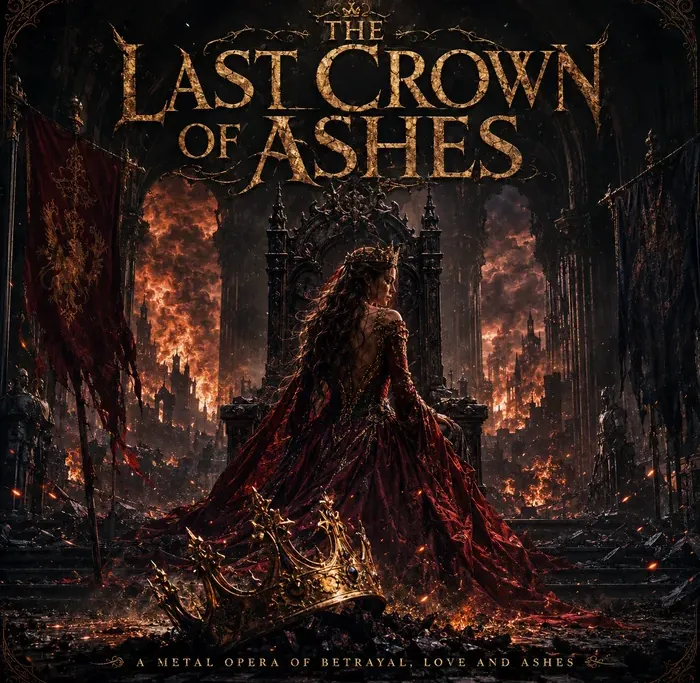
A fantasy metal opera of coronation, siege, memory, and fire, where royal grandeur keeps giving way to blood and political consequence.
Fall of the Chosen
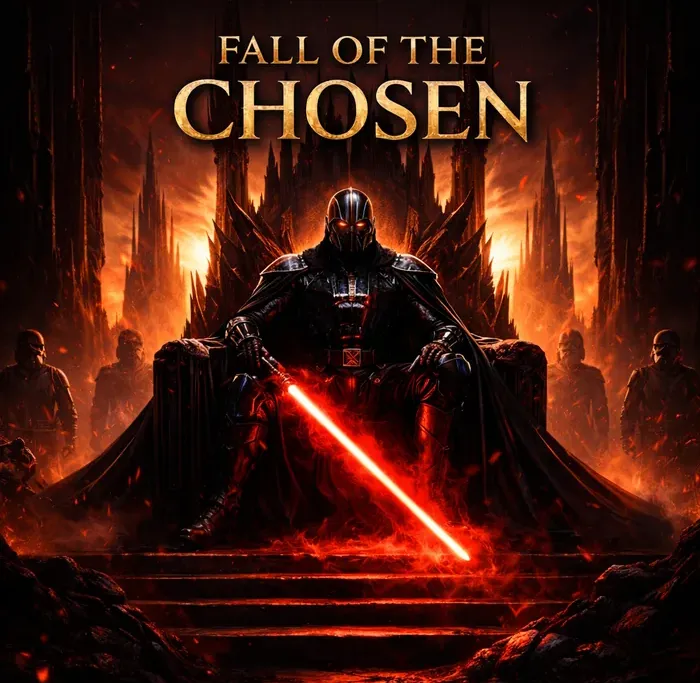
A metal opera about prophecy curdling into violence. Heavy guitars, theatrical vocals, and dark orchestration follow a chosen hero as certainty breaks him.
The Sound Beyond the System
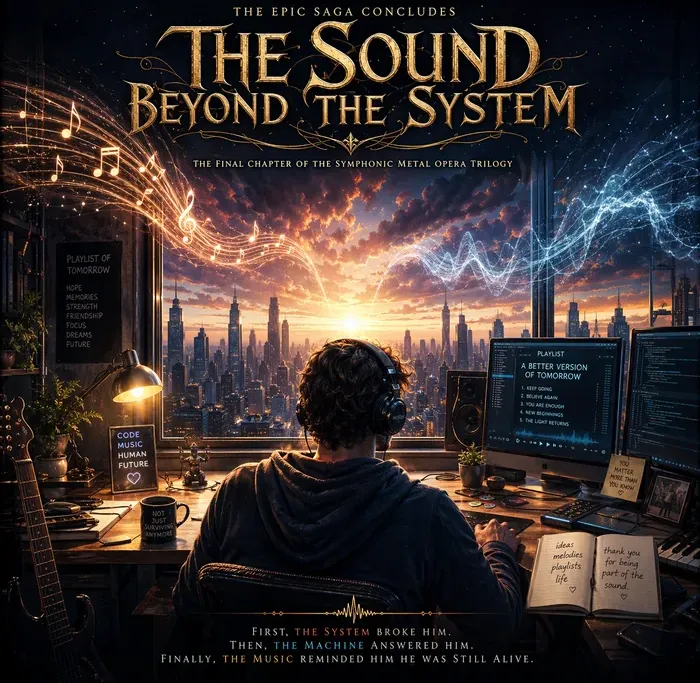
A warmer metal opera about rediscovering music after work has narrowed life too much. Heavy guitars meet hope, small projects, and late-night signals.
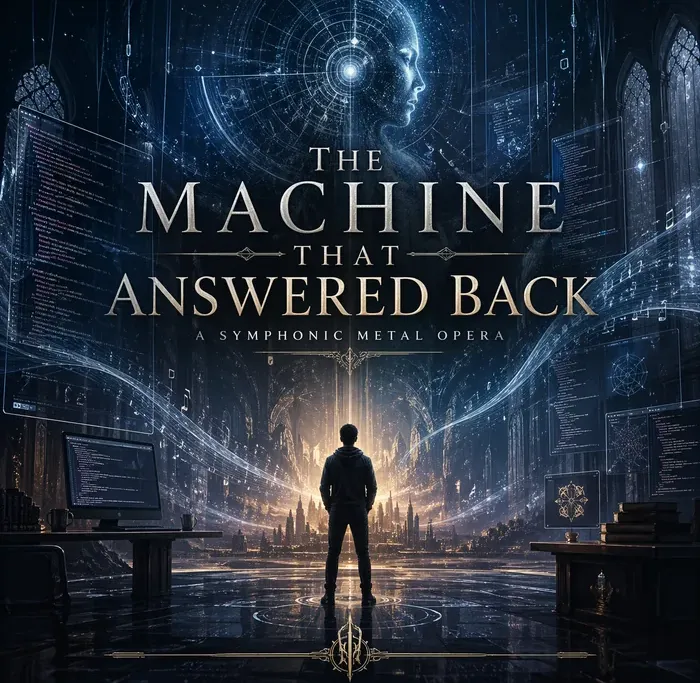
The Machine That Answered Back
A dark workplace metal opera about software pressure, impossible deadlines, broken requirements, and the moment the system starts talking back.