
Rock Opera
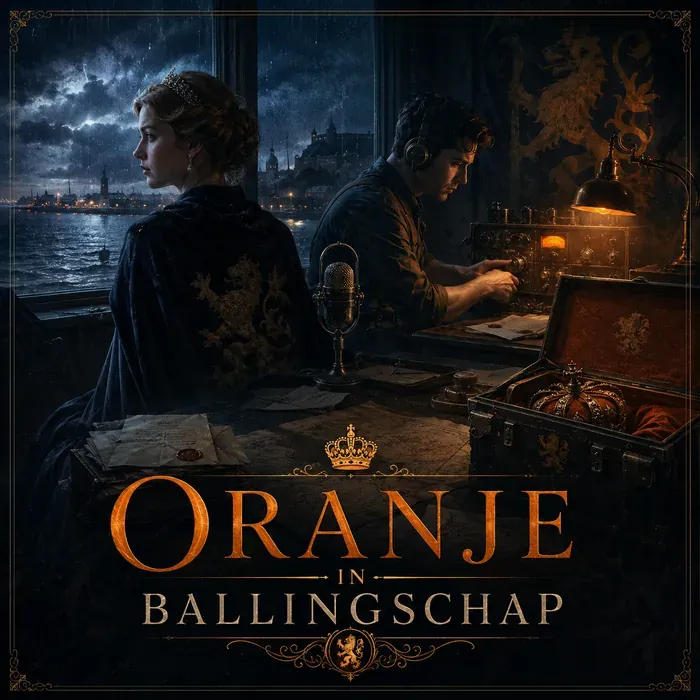
Oranje In Ballingschap
Oranje In Ballingschap is a Dutch-language symphonic rock opera about exile, hidden broadcasts, royal symbolism, and the strange weight of carrying a homeland from across the water. Orchestral strings, piano, choirs, guitars, radio static, and hymn-like choruses shape a fictional wartime story of voices sent through darkness.
- Tracks 14
- Length 49 min
Liner Notes
A short editorial read on the album world, sound, and standout moments.
About the Album
Oranje In Ballingschap is written like a rock opera, but its best scenes are not the grand ones. They are small: rain over Dover, a crown packed into luggage, a voice pushing through static. The album uses exile as a stage, yet it keeps returning to ordinary objects that can carry too much meaning when a country has become unreachable.
The music leans on symphonic rock language: piano, strings, choirs, electric guitars, slow-building drums, and broad choruses that sound almost ceremonial. Radio static matters just as much as the orchestra. It gives the album texture and a reason to breathe. The voice is never completely clean. It has to fight its way through distance, weather, fear, and bad reception.
“Regen boven Dover” opens with displacement rather than heroism. “De Kroon in de Koffer” is the stronger image: power reduced to something that must be folded, hidden, and carried. “Stem door de Storing” then gives the record its central mechanism. A broadcast is not only communication here. It is proof that someone is still listening from the other side.
The first half is full of coded loyalty. “Geen Land Onder Mijn Voeten” makes exile physical, as if the ground itself has been removed. “Brieven in Geheimschrift” turns private language into survival. “De Leeuw op de Zolder” keeps national identity in an attic, away from public view, while “Sirenes aan de Theems” brings the danger closer to the windows of the exiled city.
“Namen in het Donker” is where the album becomes less about symbols and more about people. Names kept in the dark are fragile records of who still matters. “De Nacht van de Eed” has the necessary ceremony, but the oath works because the album has already earned its fear. “Onder Oranje Licht” then lets the royal color become less decorative, more like a dim lamp that people gather around because there is not much else.
The final movement pushes from silence toward return. “Als de Rivieren Zwijgen” imagines the homeland as a place holding its breath. “Vrijheid Heeft een Stem” is the obvious anthem, but it lands because the record has spent so much time with broken signals and whispered names. “Terug door de Mist” does not make the return clean. The fog remains. “Morgen aan de Maas” closes with morning light, not triumph.
What keeps Oranje In Ballingschap from becoming pageantry is its attention to transmission. The album is not simply about crowns, flags, or speeches. It is about what a voice can do when bodies cannot cross the water: comfort, command, remember, misfire, and still keep a thread alive.
Production Notes
All tracks were generated with AI music models, then processed for the final sound. No human performance recordings are used.
Enterprise: Voyage Through the Void
A rock opera for deep-space peril, built from hard rock, synths, orchestral drama, and the familiar pressure of command when the stars stop feeling safe.
The Blood Moon Saga
The Blood Moon Saga is dark Viking metal with blackened folk weight, harsh vocals, ritual drums, cold guitars, deep choirs, and a blood-feud story where a red moon is mistaken for a command instead of a warning.
The Sound Beyond the System
A warmer metal opera about rediscovering music after work has narrowed life too much. Heavy guitars meet hope, small projects, and late-night signals.
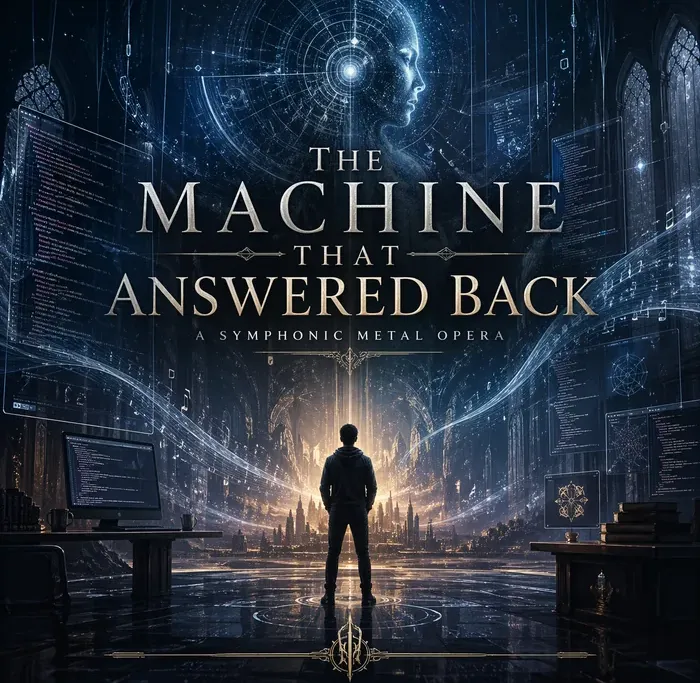
The Machine That Answered Back
A dark workplace metal opera about software pressure, impossible deadlines, broken requirements, and the moment the system starts talking back.