
Cinematic Nordic Pop
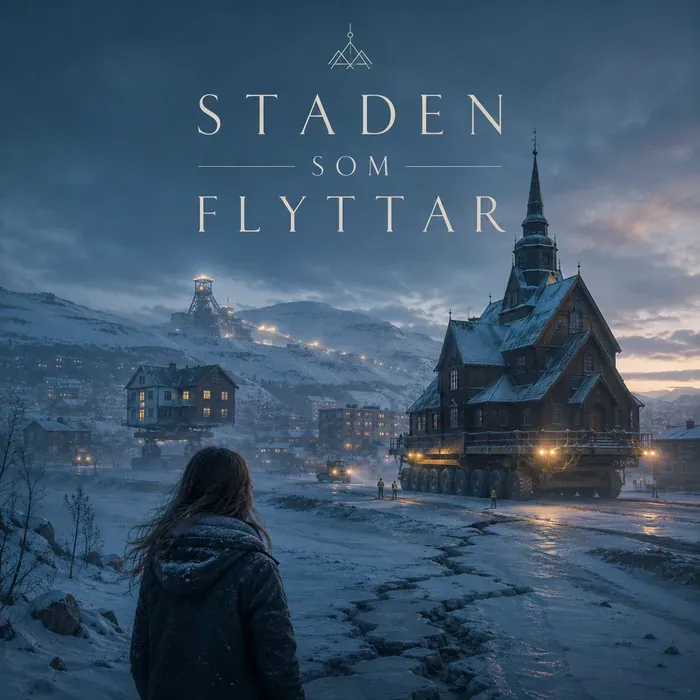
Staden Som Flyttar
Staden Som Flyttar is a Swedish-language cinematic Nordic pop album about a mining town that has to move, and about the families who carry memory from one address to another. Reverb guitars, cold synths, deep drums, strings, and industrial textures frame a story of cracks, maps, machines, graves, and new windows in the dark.
- Tracks 14
- Length 53 min
Liner Notes
A short editorial read on the album world, sound, and standout moments.
About the Album
Staden Som Flyttar begins with a small domestic failure. “Sprickan I Hallen” is not a disaster scene; it is a crack in a hallway, the kind of mark a family would walk past for years until it starts to mean something. That is the album’s best instinct. It treats relocation not as an urban planning topic, but as a slow change in the rooms where people have already spent their lives.
The sound is cinematic Nordic pop with an industrial undertow. Cold synth pads and reverb guitars give the songs distance, while deep drums and machine-like textures keep reminding the listener what is moving below the surface. The album does not need to shout about scale. The scale is already there in the contrast between a family object and an entire city in motion.
“Farfars Hjälm” gives the mine a human face through the grandfather’s helmet: pride, work, danger, and inheritance in one object. “Mor Står Vid Torget” brings the mother into public space, standing where memory becomes argument. “Kyrkan På Väg” is the most striking early image, because a church on the move is both practical and uncanny. It turns tradition into cargo.
The middle section is where the album becomes more painful. “Barnrummet Under Snön” understands that a childhood room cannot be relocated by simply labeling a box. “Malmens Andetag” gives the ore a breath of its own, as if the ground has always been alive under the town. “Brev Till En Ny Adress” makes the future feel administrative before it feels hopeful: a new address, a changed route, a life that has to be forwarded.
“Under Midnattssolen” keeps grief exposed under too much light. There is no darkness to hide in, which makes the next stretch hit harder. “De Flyttade Gravarna” is the album’s coldest idea: even the dead are not allowed to stay. “Maskiner I Natten” answers with movement, engines, and work lights, while “Kartan Utan Gator” looks at a planned place before it has memory.
“När Marken Ger Sig” is the turning point, not because the narrator accepts the move happily, but because the ground has made argument irrelevant. “På Lastbilens Flak” then turns the city into cargo: furniture, windows, signs, tools, maybe whole pieces of a family’s history passing through snow. The closing track, “Där Nya Fönster Lyser,” is careful with hope. New windows can glow without replacing the old ones.
Staden Som Flyttar works because it keeps progress and loss in the same frame. It is about extraction, yes, but more importantly it is about what extraction does to ordinary objects: a hallway, a helmet, a square, a grave, a map, a window. The record’s drama comes from the gap between what can be moved and what can only be carried.
Production Notes
All tracks were generated with AI music models, then processed for the final sound. No human performance recordings are used.
Tuhansien Järvien Laulut
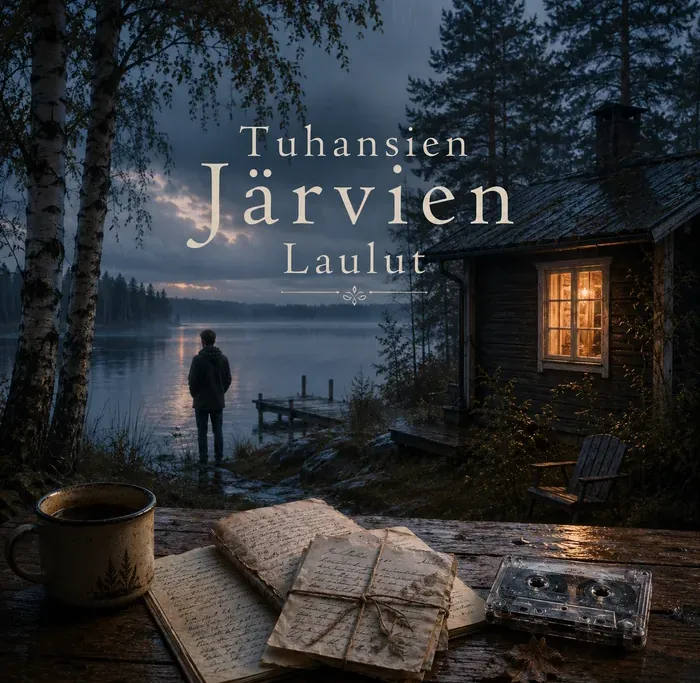
Tuhansien Järvien Laulut is a Finnish folk rock album about returning from Helsinki to an old lakeside cottage after a family loss. Acoustic guitars, piano, restrained drums, lake ambience, rain, cassette hiss, and quiet vocals carry a story of memory, grief, silence, and inherited tenderness.
Under Oljehimmelen
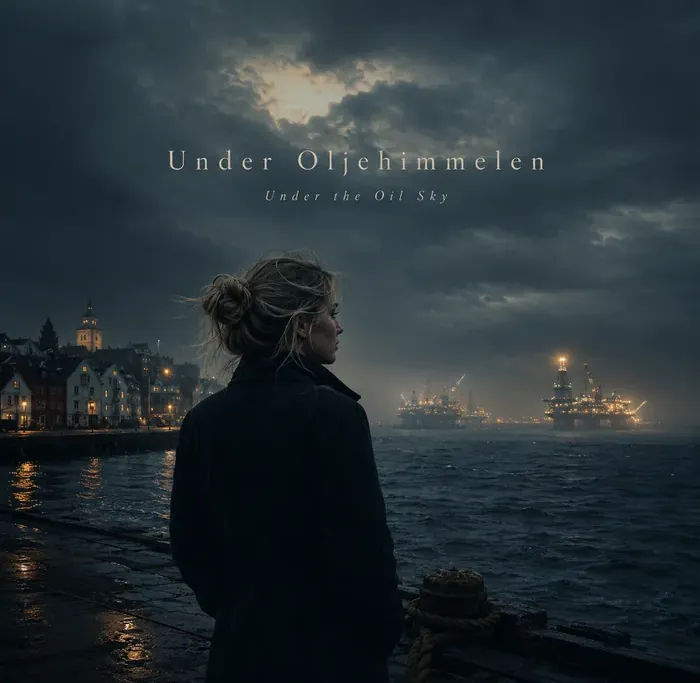
Under Oljehimmelen is a Norwegian-language Nordic dark pop album about a family shaped by offshore work, oil money, climate guilt, and the sea. Cold synths, slow drums, deep guitars, strings, and coastal atmosphere frame a story where love for a father meets doubt about the world that paid the bills.
Velvet Coffin
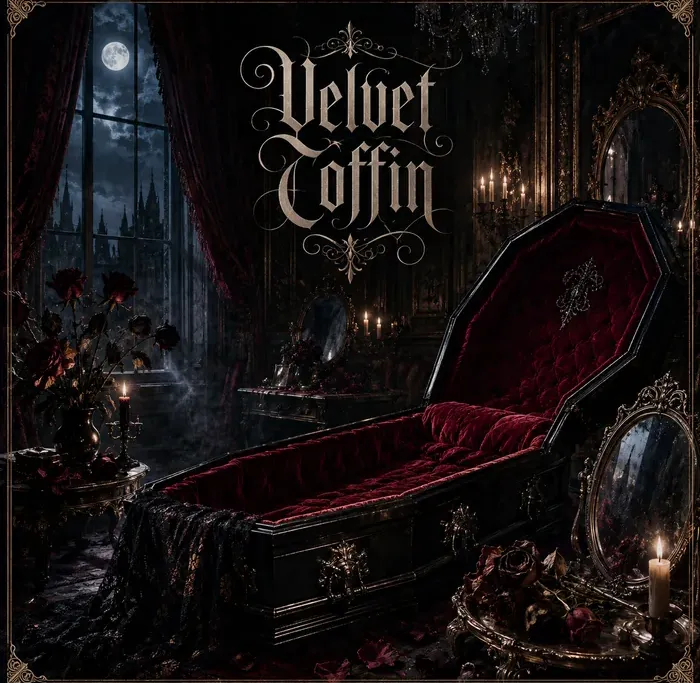
Velvet Coffin is a dark romantic gothic rock and post-punk album about a relationship that stays beautiful long after it has become unlivable. Driving bass, dry drums, shadowed guitars, darkwave textures, and low-lit vocals carry a story of desire, control, memory, and escape.
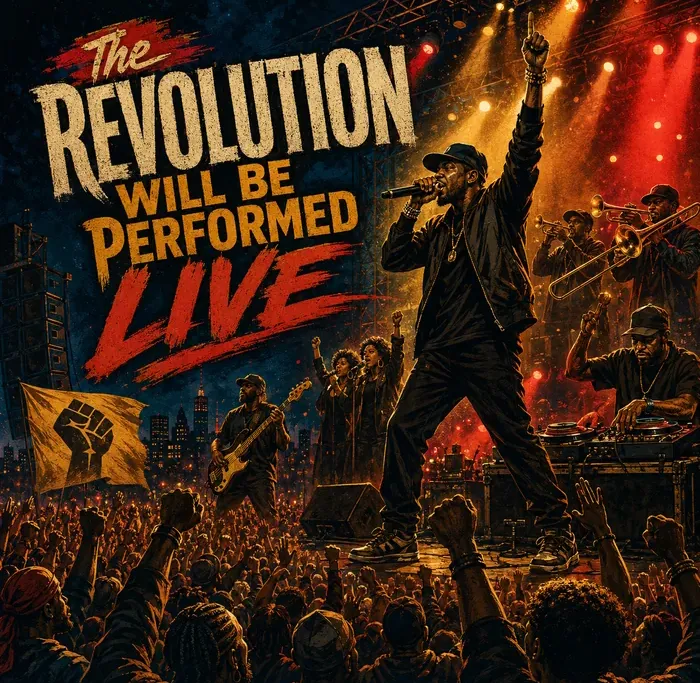
The Revolution Will Be Performed Live
The Revolution Will Be Performed Live is political hip-hop staged as an open-air protest concert: live drums, funk bass, brass, DJ scratches, crowd chants, and rap verses aimed at corruption, fear politics, paywalls, war profit, and public resistance.