
Folk Metal
The Tavern at World’s End
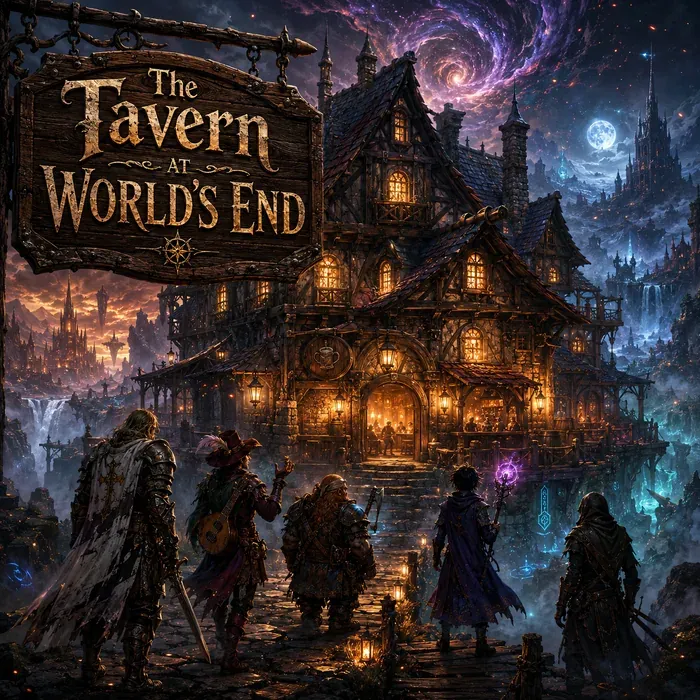
The Tavern at World’s End is fantasy folk rock with tavern choirs, fiddle, flute, mandolin, heavy guitars, and a firelit story about five damaged travelers who find a doorway beneath an inn that should not exist.
- Tracks 14
- Length 43 min
Liner Notes
A short editorial read on the album world, sound, and standout moments.
About the Album
The Tavern at World’s End understands the appeal of the fantasy inn: warmth first, danger later. The album begins with rain, candles, raised mugs, and songs passed around a room by people who have nowhere better to go. That matters, because the record needs the tavern to feel like shelter before it can turn the floorboards into a threshold.
The cast is drawn from familiar role-playing shapes: a paladin with a broken oath, a bard who jokes too quickly, a dwarf carrying an old kingdom in his bones, a young mage afraid of her own power, and a thief with a key he does not fully understand. The album does not pretend these are new archetypes. It works because it treats them as useful instruments. Each character brings a different tone into the room before the quest begins.
Musically, the record sits between fantasy folk rock and tavern metal. Mandolin, fiddle, flute, acoustic guitar, hurdy-gurdy color, hand percussion, and rough group vocals give the early songs their table-thumping pull. When the story moves below the inn, the guitars get heavier and the drums start to feel less like celebration and more like pursuit. The best moments keep both halves alive: firelight in the chorus, danger under the floor.
“Candles in the Rain” opens with the right kind of welcome, not grand enough to spoil the mystery. “The Bard Laughs Last” gives the album its necessary mischief, while “Ironbeard’s Oath” brings in memory, debt, and the older sadness that fantasy drinking songs often hide. “Map of No Roads” and “The Mage with Starlit Hands” widen the room until the tavern no longer feels like a building. It feels like a place the world has been using to keep a secret.
The middle section is where the album becomes more than a drinking-song collection. “Thief of the Silver Key” points the story downward, and “Beneath the Floorboards” makes the shift literal. “The Door That Drinks the Light” is a strong image because it changes the mood without needing much explanation. “Ale for the Dead” then slows the pace in the right place, giving the failed travelers before them a song rather than a footnote.
“The Paladin’s Broken Vow” is the emotional hinge. The quest needs monsters and portals, but the record lands better when it lets guilt become practical: a reason to move, choose, and stand with others. “Feast of the Hollow King” gives the final act its villain, one who feeds on memory, names, songs, and oaths. That is a good enemy for a tavern record, because those are exactly the things a tavern is supposed to keep alive.
“Five Against the Dark” is the album’s big companion anthem, but its force comes from imperfection rather than clean heroism. These are not chosen champions polished for a tapestry. They are people who have run out of solitary options. “Last Round Before Dawn” lets them have one final human moment before the ending, which keeps the finale from becoming only spectacle.
When “When the Hearth Becomes the Sun” closes the album, the image works because it has been earned all along. The hearth was never just cozy scenery. It was the record’s moral center: small heat against a large dark. The Tavern at World’s End is strongest when it remembers that fantasy does not need to be complicated to carry weight. Sometimes it needs a door, a song, five flawed companions, and a fire that refuses to go out.
Production Notes
All tracks were generated with AI music models, then processed for the final sound. No human performance recordings are used.
Staden Som Flyttar
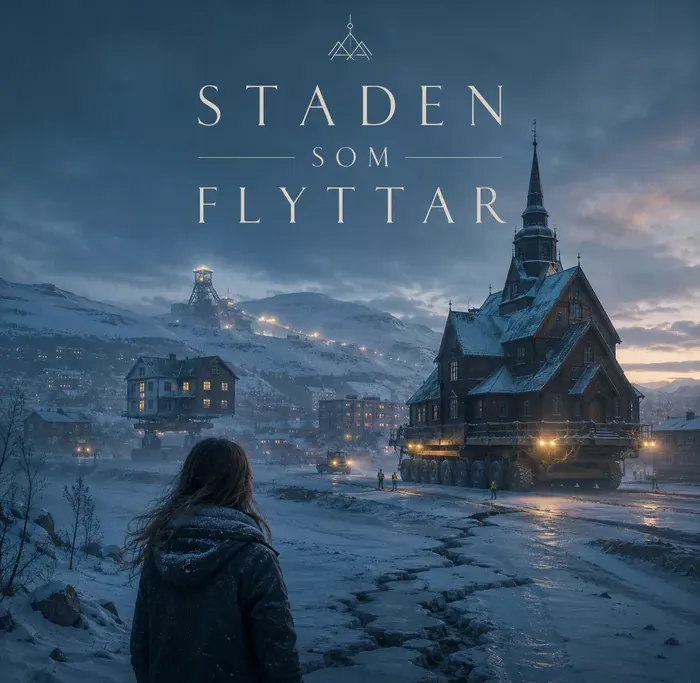
Staden Som Flyttar is a Swedish-language cinematic Nordic pop album about a mining town that has to move, and about the families who carry memory from one address to another. Reverb guitars, cold synths, deep drums, strings, and industrial textures frame a story of cracks, maps, machines, graves, and new windows in the dark.
Tuhansien Järvien Laulut
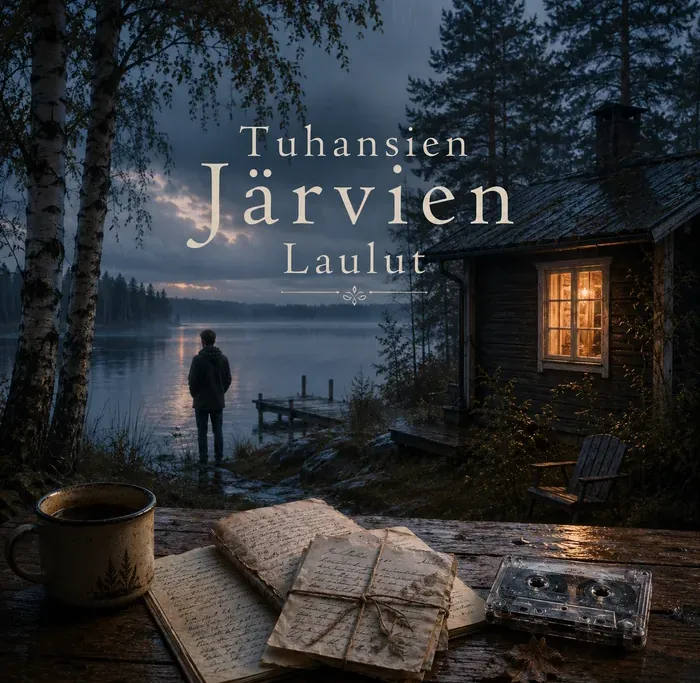
Tuhansien Järvien Laulut is a Finnish folk rock album about returning from Helsinki to an old lakeside cottage after a family loss. Acoustic guitars, piano, restrained drums, lake ambience, rain, cassette hiss, and quiet vocals carry a story of memory, grief, silence, and inherited tenderness.
Under Oljehimmelen
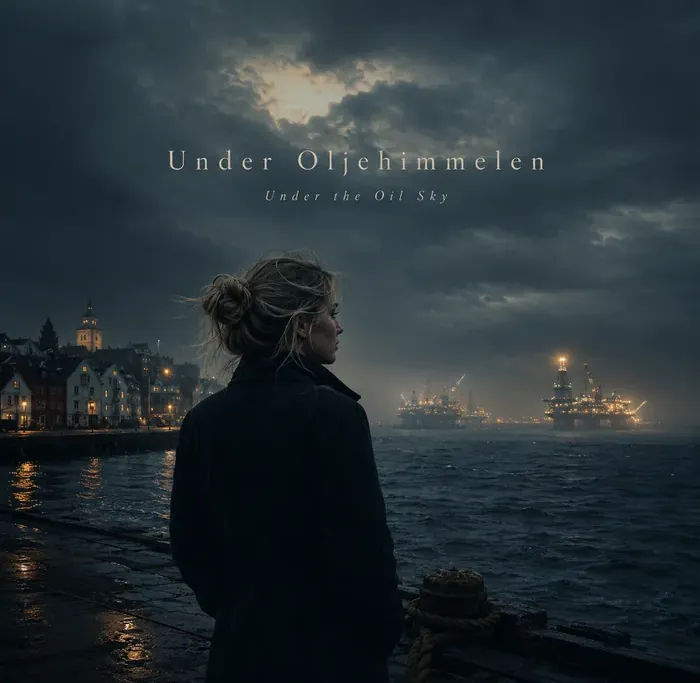
Under Oljehimmelen is a Norwegian-language Nordic dark pop album about a family shaped by offshore work, oil money, climate guilt, and the sea. Cold synths, slow drums, deep guitars, strings, and coastal atmosphere frame a story where love for a father meets doubt about the world that paid the bills.
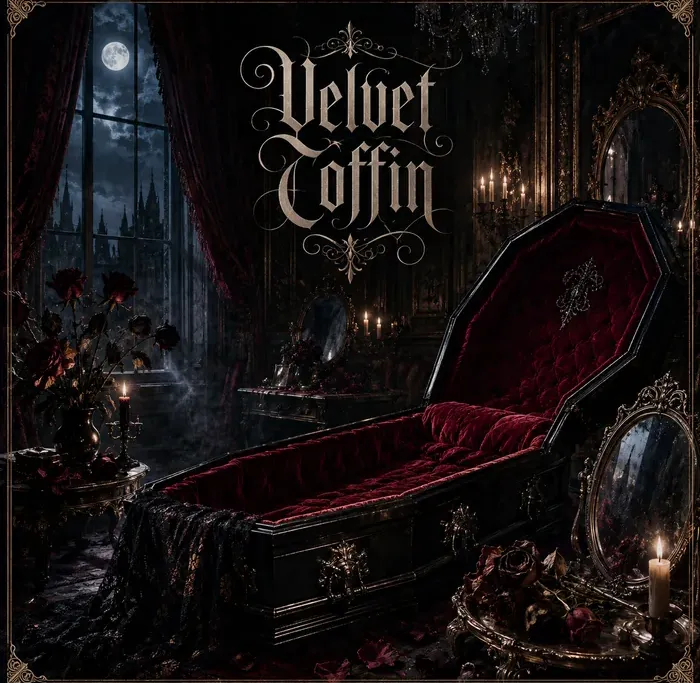
Velvet Coffin
Velvet Coffin is a dark romantic gothic rock and post-punk album about a relationship that stays beautiful long after it has become unlivable. Driving bass, dry drums, shadowed guitars, darkwave textures, and low-lit vocals carry a story of desire, control, memory, and escape.