
Nordic Dark Pop
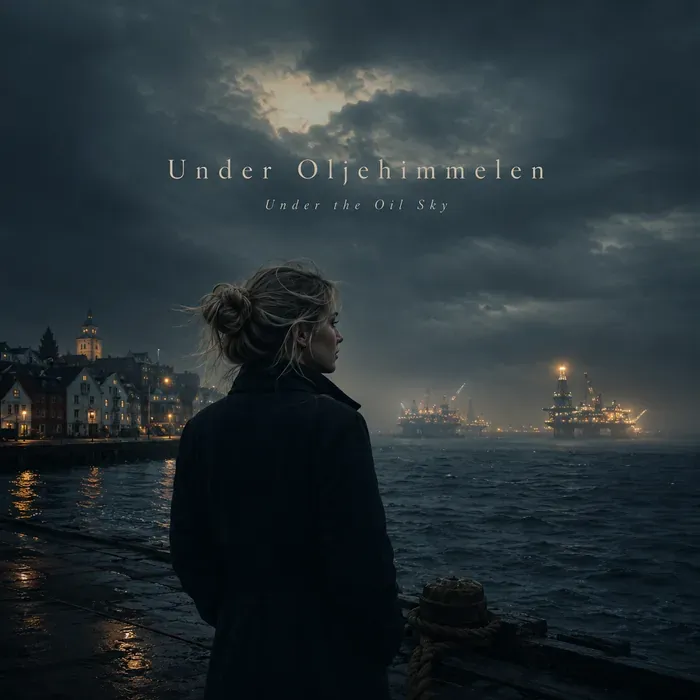
Under Oljehimmelen
Under Oljehimmelen is a Norwegian-language Nordic dark pop album about a family shaped by offshore work, oil money, climate guilt, and the sea. Cold synths, slow drums, deep guitars, strings, and coastal atmosphere frame a story where love for a father meets doubt about the world that paid the bills.
- Tracks 14
- Length 57 min
Liner Notes
A short editorial read on the album world, sound, and standout moments.
About the Album
Under Oljehimmelen is built around a difficult inheritance. The album’s narrator comes from a coastal family whose stability was tied to offshore work. That gives the record its tension from the start: oil is not an abstract enemy here. It is a father coming home tired, a house kept warm, a child waiting at the harbor, and a future paid for by something the next generation can no longer accept without question.
“Lys Over Vågen” opens with light on the water, but the brightness is uneasy. “Far Kom Hjem Fra Havet” is more intimate, centered on the return of a parent from the platforms. The album is strongest when it stays in that domestic scale. It lets the political question pass through kitchens, rain jackets, ferry terminals, and old family silences instead of turning every line into a slogan.
“Sorte Hender, Hvite Hus” gives the contradiction a sharp image: dirty hands, clean houses. “Regn Over Stavanger” keeps the mood low and coastal, while “Toget Mot Oslo” shifts the narrator away from home and toward another language of responsibility. The train matters as a scene because it is not only movement. It is distance from the version of childhood that made the world seem simpler.
The middle of the album is where the guilt becomes harder to keep theoretical. “Barn Av Fondet” names the comfort of inherited wealth without making the child responsible for choosing it. “Varmere Hav” brings the sea back as something more than scenery. “Plattformlys” then returns to the old lights offshore, no longer heroic, not purely shameful either. They are family memory and warning signal at the same time.
“Vi Bar Det Hjem” and “Brev Til Min Far” give the record its most human pressure. The daughter can criticize the system, but she cannot pretend her father was only a symbol inside it. That is why “Ingen Rene Hender” works: it refuses the comfort of innocence. Everyone has carried something home. Everyone has benefited, compromised, loved, or looked away.
The final run turns outward without losing the personal thread. “Stormen Har Et Navn” gives the weather a moral weight, and “Når Havet Svarer” lets the sea answer back in the only language the album trusts: pressure, return, erosion, memory. “Etter Oljen” closes without a clean solution. It imagines life after the thing that made the family possible, and it leaves that future unresolved.
Musically, Under Oljehimmelen favors space over spectacle. Slow drums, dark synths, restrained guitars, low strings, and coastal ambience give the songs room to sit with contradiction. It is not an easy protest record. It is a family album about money, work, weather, gratitude, and the moment when love no longer protects you from asking the harder question.
Production Notes
All tracks were generated with AI music models, then processed for the final sound. No human performance recordings are used.
Staden Som Flyttar
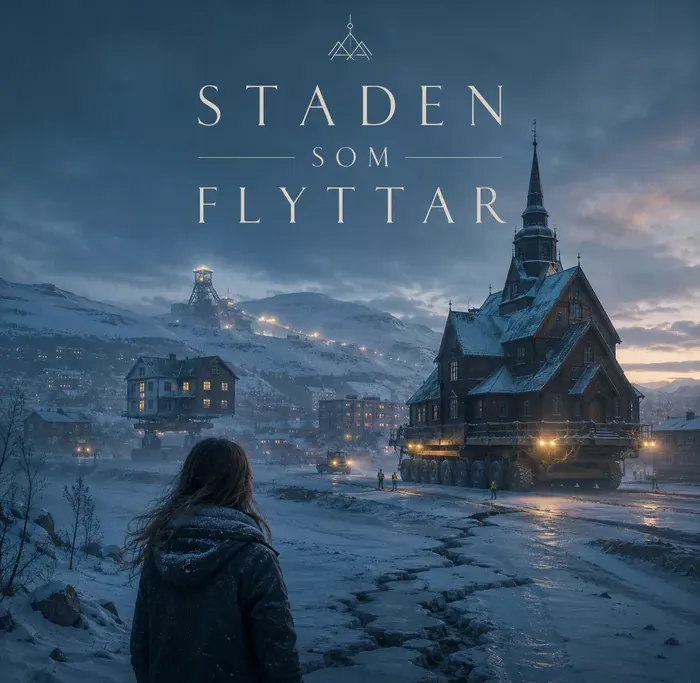
Staden Som Flyttar is a Swedish-language cinematic Nordic pop album about a mining town that has to move, and about the families who carry memory from one address to another. Reverb guitars, cold synths, deep drums, strings, and industrial textures frame a story of cracks, maps, machines, graves, and new windows in the dark.
Tuhansien Järvien Laulut
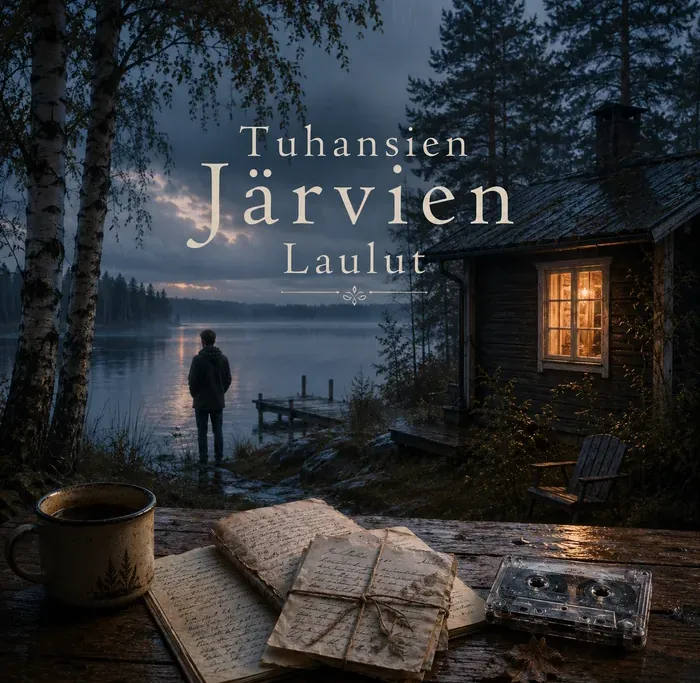
Tuhansien Järvien Laulut is a Finnish folk rock album about returning from Helsinki to an old lakeside cottage after a family loss. Acoustic guitars, piano, restrained drums, lake ambience, rain, cassette hiss, and quiet vocals carry a story of memory, grief, silence, and inherited tenderness.
Velvet Coffin
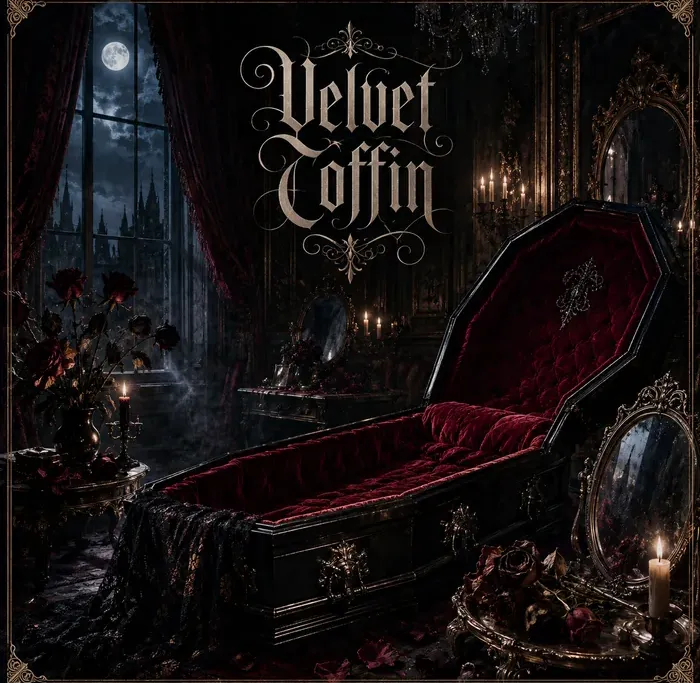
Velvet Coffin is a dark romantic gothic rock and post-punk album about a relationship that stays beautiful long after it has become unlivable. Driving bass, dry drums, shadowed guitars, darkwave textures, and low-lit vocals carry a story of desire, control, memory, and escape.
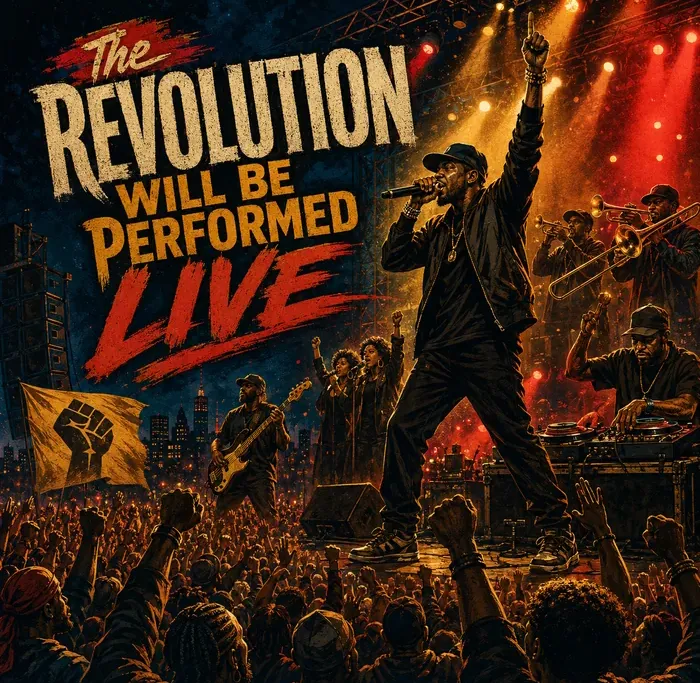
The Revolution Will Be Performed Live
The Revolution Will Be Performed Live is political hip-hop staged as an open-air protest concert: live drums, funk bass, brass, DJ scratches, crowd chants, and rap verses aimed at corruption, fear politics, paywalls, war profit, and public resistance.